Read Emma Lee‘s Review of Jonah here!
Review of Jonah by Irish poet, critic and publisher Billy Mills.
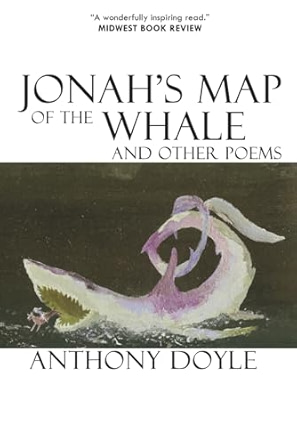
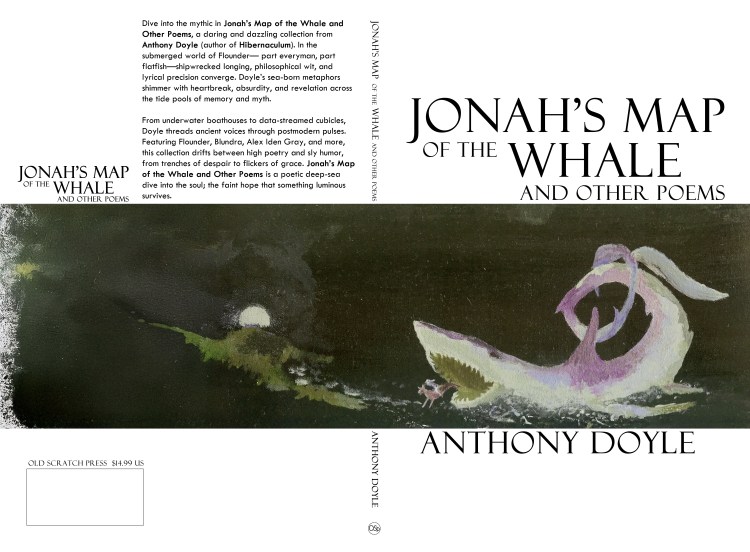
The poems in Anthony Doyle’s Jonah’s Map of the Whale and Other Poems are pretty far removed from the personal; his first-person narrators are clearly personas, and those personas, three main ones in all – one per section of the book, are nearer to archetypes than individuals, carrying something of a mythical nature. The stories he tells are narratives, fables, romances, but never anecdotes. It’s worth remembering that Doyle, an Irish writer living in Brazil, has previously published speculative sci-fi.
The first of these personas is Flounder, a flatfish, sometimes beachcomber, who dreams of being a full-time man, married to Molly (Malone, the fishmonger?) and who lives in Irish waters:
Flounder watches from the mud floor.
Light shafts wobble in disturbed murk.
Eight minutes through space for this,
to drown, uncertain, in an Irish estuary.
The rays dust the fish with silver,
but merely pro-forma; there’s no bravado left.
(from ‘Flounders’)
The image of light transformed sits beside Flounder’s awareness of his own questionable permanence, ‘Flounder changes, but there is always Flounder’, and sense of being trapped in time:
The future never came.
The past just got longer.
Queuing memories stare
through the backs of each other’s eyes.
(from ‘ Flounder’s Photographic Memory’)
After Flounder, we meet Blundra, a mermaid who works in Tech, has investments, is on social media, likes a latte and dabbles in tarot readings. At the heart of this second section of the book is a facing-page doubled text comprising most of the long poem ‘Blundra on a winter Wednesday (Wakersgrave)’. On the verso pages, in roman type, ‘Blundra recalls an old legend/about a dragon in its den.’ What follows is a kind of rhymed medieval romance in which the George and the Dragon/Gabriel and Lucifer stories are melded, with the twist that the dragon wins in the end. The recto-page italic text is a kind of extended biography of Blundra:
No males in Blundra’s family photos.
The males are dead or otherwise gone.
Family is a feminine noun, a dialectic.
Blundra tiptoes around the quicksand,
the dark matter of mother.
This matriarchal structure is in keeping with the mermaid persona, but also with the kind of telescoped evolutionary history that runs under the surface of the book, from life in the sea with Flounder, to life semi on land with Blundra, and in the final section, as we’ll see, life fully on land and upright.
The recto also serves as a kind of running commentary on the facing narrative:
Omniscience excludes error
Omniscience excludes failure
Omniscience excludes otherness.
Yet we’re told it’s all the Devil’s fault!?
There was no Fall. That angel was pushed!
This view that myth, like history, is written by the winners is a prelude to Blundra’s assertion of her humanness:
We know very little of anything
but something of nothing.
Is that what makes us human, Grand-mama?
‘Yes, my dear. I suspect it is.’
A few lines later the Blundra section ends and the third section, devoted to the ‘finless vertebrate Alex Iden Gray’ begins. Gray represents the final stage of evolution so far, a ‘mereman’ and also serves as an avatar for the titular Jonah, but in his case he’s not swallowed by a whale but bitten by a shark.
He was at home in the sea,
this bipedal, finless vertebrate.
Still, it could have been much worse.
No shame in sharkbite.
But the crunch, oh
the wallop,
and drag.
The chomp.
The popping joint
and elastic snap;
the roll of an eightball eye.
Alex is at home in the sea, but more at home on land. We see him at work as a Wall St. trader during the 2008 crash, which metamorphoses into the Demeter/Persephone myth. In fact, myth really comes to the fore in this, the longest section of the book. Alex/Jonah becomes the Sumerian fish-sage Oanna and Mithraic bull riding becomes a sexualised rodeo amusement:
Did he lick your silk and part your husk,
dribble your blades with bull musk?
It wasn’t like that…
Of course not, buckaroo
How long’d he stay on for?
Did he make the buzzer?
In the end, we see Alex wakening in hospital, minus a leg; has everything been a morphine induced dream? Who knows, and it doesn’t matter. At the centre of Doyle’s vision is an idea of life as entropy, a world where:
What structures-up must come down:
Regimes, religions, triple-A credit ratings.
All order succumbs to the chaos it defies,
being only fueled movement before rest.
Jonah’s map of the whale is a map of things with endings. A fascinating book.
Titles 2023/2025

A short-form collective producing poetry, flash prose, prose poetry, experimental poetry, visual poetry, and everything in between.
Other titles by OSP members
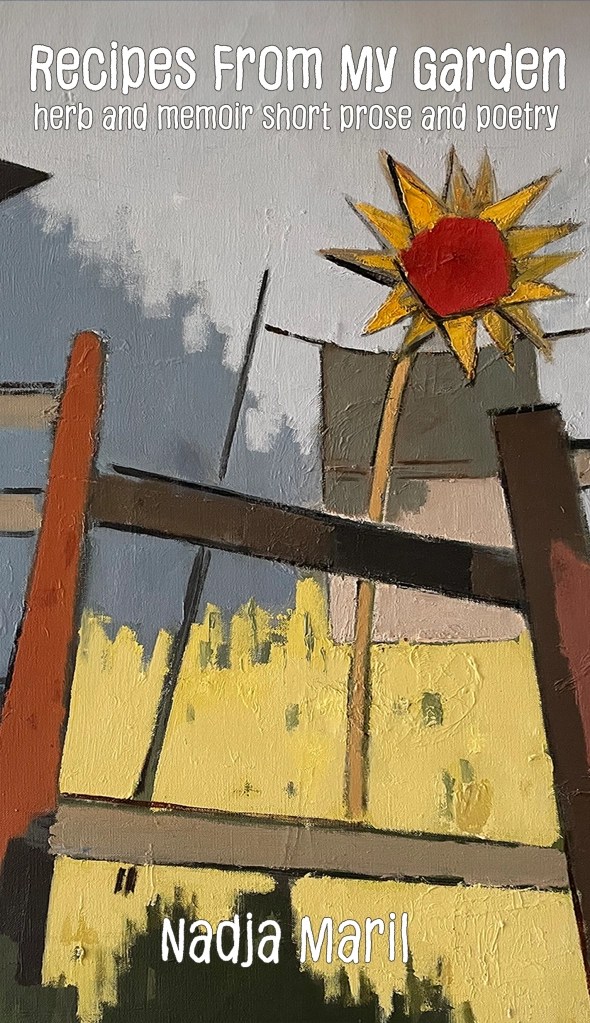
Recipes from my Garden
by Nadja Maril
Flash prose, poetry, and essays inspired by her kitchen, garden, and family memories.
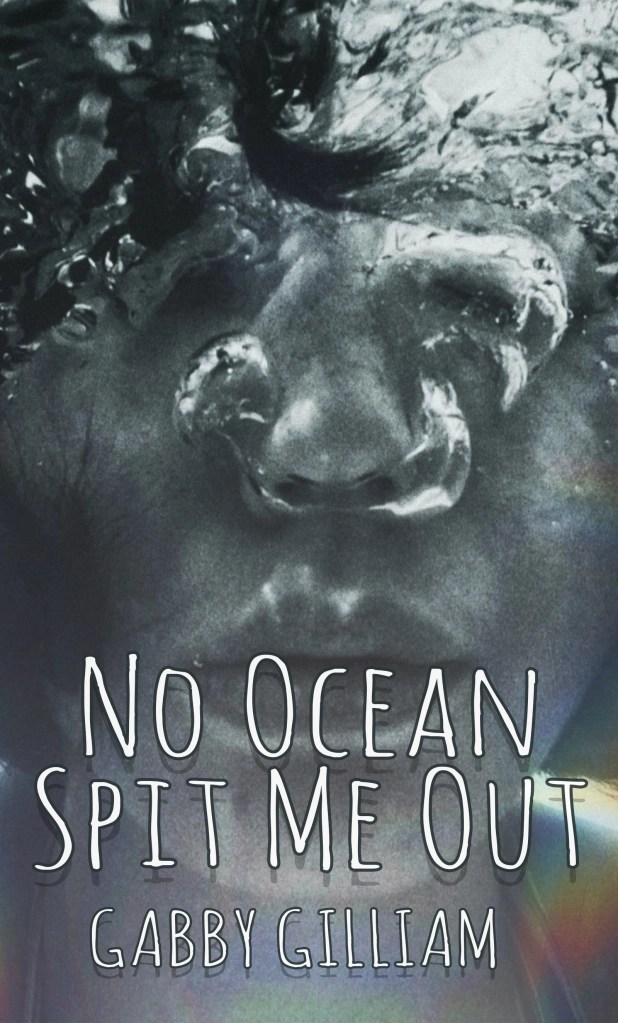
No Ocean Spit Me Out
by Gabby Gilliam
A captivating debut collection of poetry that delves deep into the intricate tapestry of family dynamics and personal evolution.
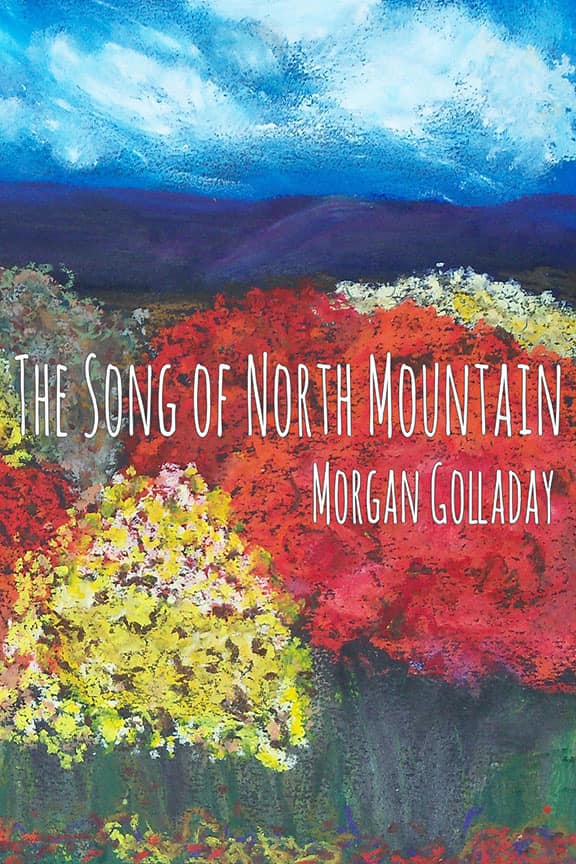
The Song of North Mountain
by Morgan Golladay
2024 National Book Award nominee.
Morgan Golladay brings her readers to dwell in the reverence of this wonderful wilderness.
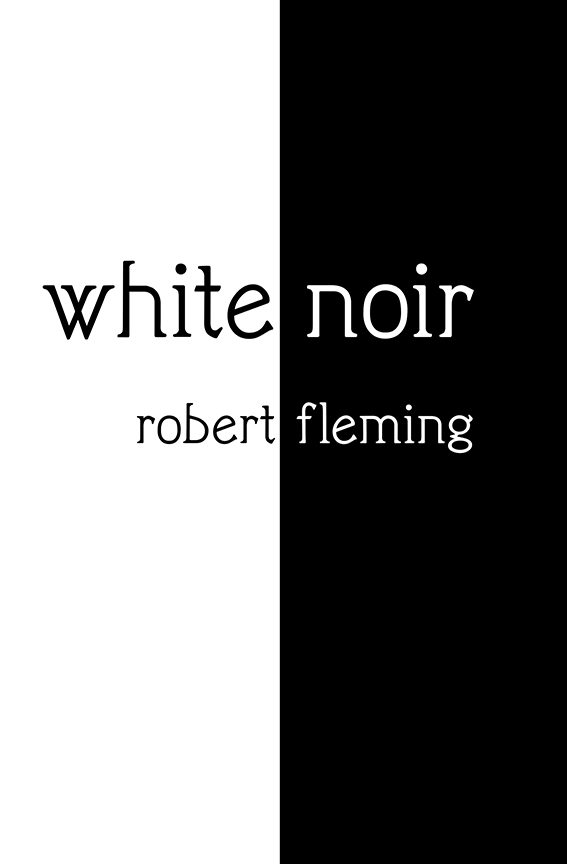
White Noir
by Robert Fleming
More than poetry, this is a tapestry of emotions on paper. Featuring a striking cover designed by the author.
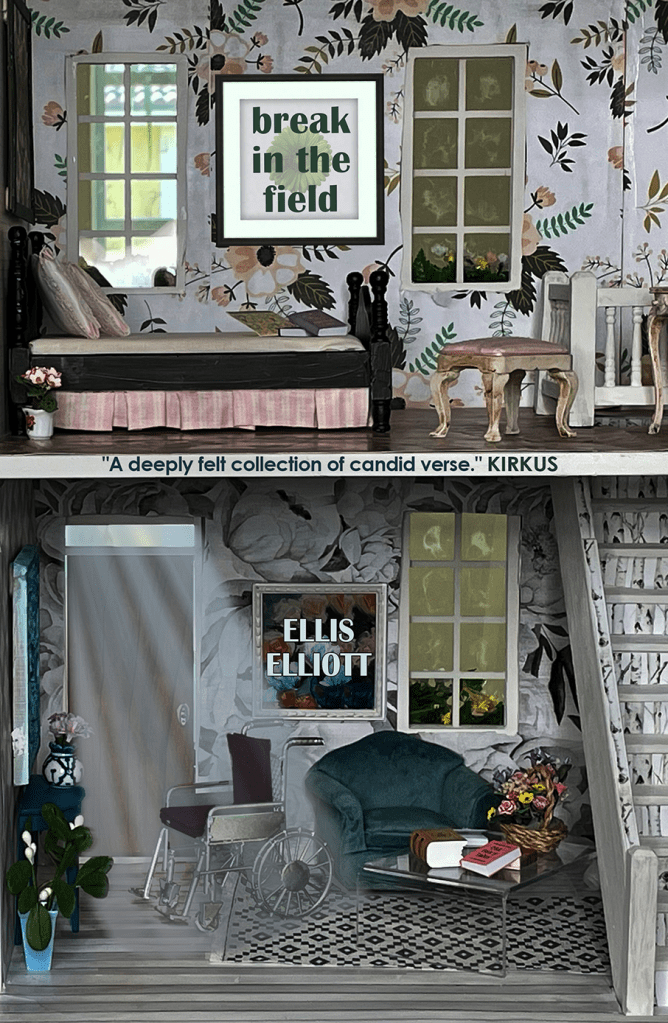
Break in the Field
by Ellis Elliot
A 2023 National Book Award nominee title, this outstanding collection is a work you’ll want to revisit time and again.
 Anthony Doyle